Ambient Intelligence in Healthcare — The Future is Near
Significant strides in artificial intelligence and advanced computing are changing how innovators and healthcare specialists are imagining the future of care. The future of ambient intelligence in healthcare can be boiled down to this: advanced environmental devices that permeate the physical world and provide state of the art care — both reactive and proactive.



Ambient Intelligence in Healthcare — The Future is Near
Significant strides in artificial intelligence and advanced computing are changing how innovators and healthcare specialists are imagining the future of care. The future of ambient intelligence in healthcare can be boiled down to this: advanced environmental devices that permeate the physical world and provide state of the art care — both reactive and proactive.
But what does that really mean? What does that look like?
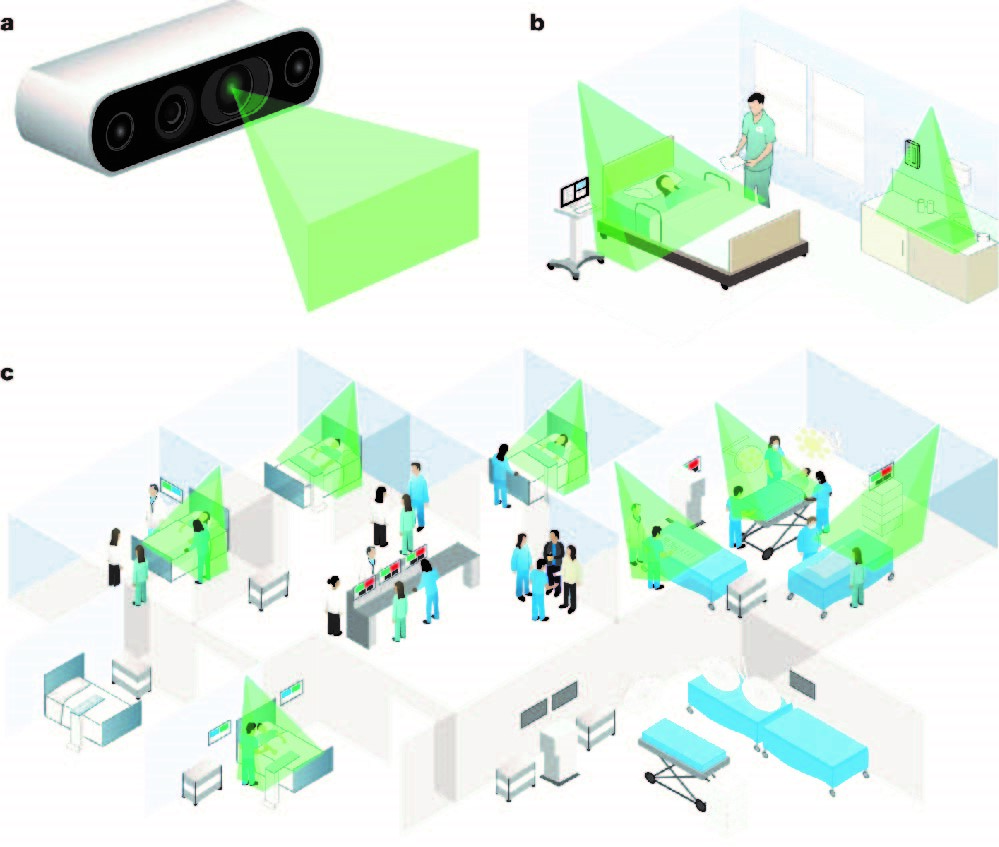
We can think of ambient intelligence in healthcare as technology that is, as one study suggests, context aware, personalized, anticipatory, adaptive, ubiquitous, and transparent. Lots of buzz words, here, admittedly. But imagine a fully autonomous, ambient device that uses a host of physical sensors to monitor a patient in an ICU. One that might use thermal scanning to monitor patient temperature, or acoustic sensors that could detect cardiac arrhythmia, or radar sensors to monitor even the most minute respiratory changes. Ones that, when paired with AI, could create an always-on “super-doctor.” The possibilities are exciting.
Let’s dive deeper and look at the potential practical applications of ambient intelligence in healthcare outside of the hospital or exam room.
Beyond the Exam Room
Ambient sensory devices, like the ones mentioned above, coupled with advanced artificial intelligence could start permeating our homes. Specifically, the homes of our elderly, changing how we approach their care and preserve their independence.
We’ve already seen how the advent of constant glucose monitoring (CGM) devices totally transformed how we provide care to patients with diabetes. Or how heart rate monitors and smartwatch fall detection devices have saved lives. Now imagine an even more context aware, personalized, anticipatory device that can sense, for example, when a patient might fall long before the patient actually does fall. That’s the future.
Studies have shown that radar and acoustic sensors that are wearable or placed inside living spaces can help monitor, for example, patient behavior inside the bathroom. Personal hygiene is a strong indicator of health (both mental and physical) amongst elderly populations, and a device that can detect a patient's behavior may help them preserve their independence or get the help they need when they need it.
As mentioned above, though, this technology needs to be highly advanced and personalized. In some instances, objective data may suggest that your aging grandmother’s 30 minute shower is a red flag. But what if your grandmother always enjoys 30 minute showers? Or what if she only takes 30 minute showers on Fridays, after her one mile weekly walk around the neighborhood with her girlfriend? What if a machine could glean all of that relevant information?
These highly specific examples seem almost comical, but this is technological potential is real, and not that far away.

All-Encompassing Care and “Smart” Living
At DeepScribe, we are "all-in" on all-encompassing AI intelligence devices, and for good reason. We believe that the more we can relieve clinicians of the burden of medical documentation, the more energized they will be to provide amazing care.
In many respects, the future of ambient intelligence in healthcare is no different. The more we can innovate and automate arduous medical processes, the faster we can get back to what we, as humans, do best: connect and build relationships.
If you take a futuristic ambient medical device or wearable tech and make it accessible, it won’t arbitrage out care providers, it will just return to them the opportunity to provide only the most necessary, specialized care — sans paperwork, sans hassle, sans headache. Now that is truly “smart” living.
Ethical Issues, Privacy, and Security
Obviously, the potential pervasiveness and ethical issues that arise from advanced ambient intelligence can't be ignored. Many studies state that robust interconnected device systems will “greatly increase the sheer quantity of personal information.” Additionally, they suggest the qualitative nature of daily human behavior will change dramatically, becoming increasingly more quantitative as metrics change and data collection methods advance.
These are intimidating problems, without question. At DeepScribe, we have our own rigorous standards addressing privacy and security, but we must ensure future innovations do the same.
We first must develop the technology. Despite the framework for its existence, predictive, sensory based ambient intelligence is just not totally here yet. Additionally, as we continue to have these conversations and continue to innovate, we must work equally hard on developing the security necessary to handle the load. And it will be a load.
If we can commit to that, together, then the future will be very bright.
text
Related Stories



Realize the full potential of Healthcare AI with DeepScribe
Explore how DeepScribe’s customizable ambient AI platform can help you save time, improve patient care, and maximize revenue.