Artificial Intelligence and Machine Learning Boost Operations and Administration
We at DeepScribe firmly believe that AI medical scribes will be one of the biggest change-makers of all AI/ML healthcare advances. Medical scribe technology touches all segments of a practice: medicine, legal, billing, and more.




Artificial Intelligence and Machine Learning Boost Operations and Administration
With no doubt, artificial intelligence will transform the healthcare industry, specifically clinical care delivery; It’s no longer a matter of “if,” but “when.” Artificial Intelligence and machine learning have already shook the industry, but certain AI applications will have larger impacts than others.
We at DeepScribe firmly believe that AI medical scribes will be one of the biggest change-makers of all AI/ML healthcare advances.
Medical scribe technology touches all segments of a practice: medicine, legal, billing, and more. Robust AI scribe technology has the potential to make a huge impact on physician workflows — all with the goal of reclaiming time and directing it back to patient care.
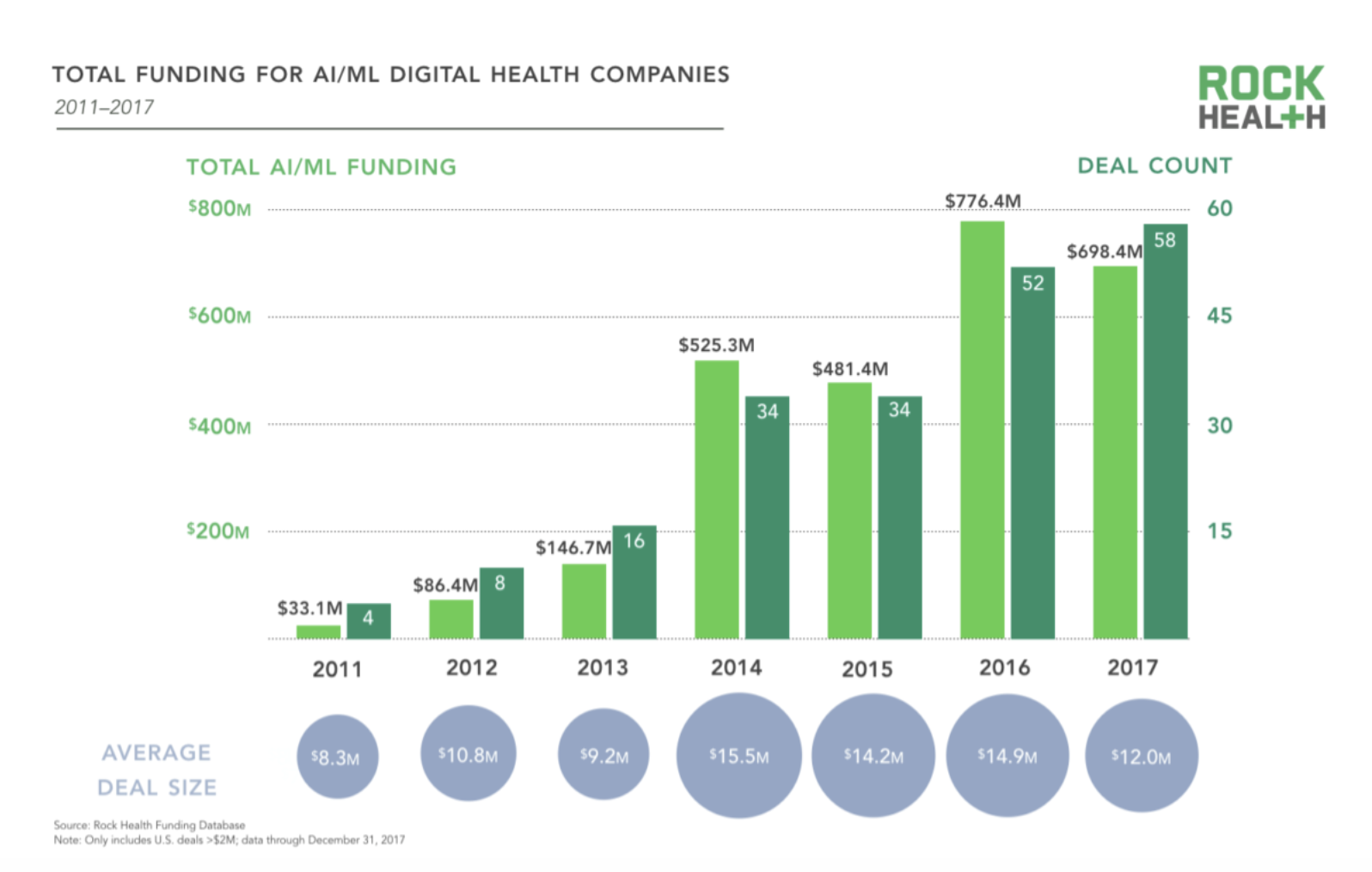
According to a Rock Health report titled “The AI/ML use cases investors are betting on in healthcare:” “media attention has largely centered on the ability of AI/ML to transform how clinical care is delivered through better diagnostics and treatments. But AI/ML is even more quickly transforming the business of healthcare through automation and enhancement of non-clinical, operational functions—such as claims adjudication, patient engagement, scheduling optimization, risk analytics, and documentation.”
DeepScribe’s success has validated Rock Health’s report. DeepScribe’s AI technology boosts the operational efficiency of doctors offices throughout the United States. Our scribe has recorded countless numbers of doctor-patient interactions and freed up hours per week for physicians.
But will AI take my job?
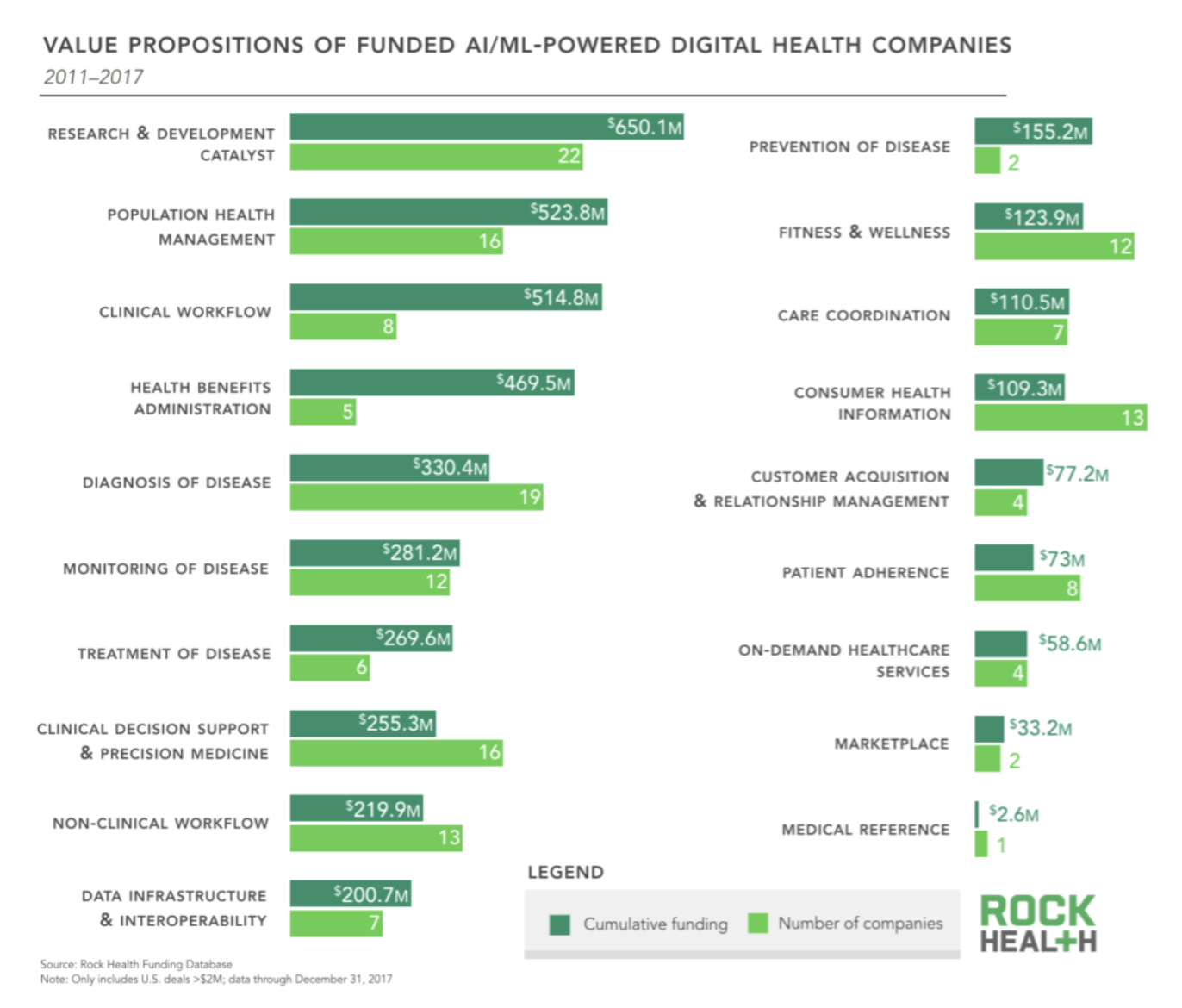
Lofty goals of AI technology diagnosing patients and recommending treatments are quite exciting for Health-Tech enthusiasts. However, the greater public is more wary of this language and worried about the potential impact. In fact, according to the same Rock Health report, “There are far fewer risks for using AI/ML to power a business function like determining a customer outreach strategy or connecting someone with a disease management app recommendation than there are for deciding how to treat someone with heart disease. And investors are wary of this risk (at least in the short-term), with only 30% of deals going to AI/ML companies that are embedded to support providers in direct patient care (e.g., Treatment of Disease, Clinical Decision Support & Precision Medicine).”
Longer term, we’re eager for AI to diagnose disease, prevent illness, and propose treatments. The goal of AI in medicine is not to do the doctors’ job, but to enhance their work and align them to what they love: helping patients.
DeepScribe Can Help
For now, administrative burdens slow doctors down. Deepscribe’s technology is fully prepared to tackle administrative bottlenecks, and shape the trends in AI medical technology for AI healthcare applications. With AI scribe integrations, doctors can ease coordination handicaps and reclaim their time.
AI scribes bridge the gap between clinical and non-clinical duties. A wide spread use of AI scribe technology has the potential to shake most segments of healthcare. Why wait?
text
Related Stories



Realize the full potential of Healthcare AI with DeepScribe
Explore how DeepScribe’s customizable ambient AI platform can help you save time, improve patient care, and maximize revenue.