Ambient Clinical Intelligence — What is it and how will it transform healthcare?
Ambient clinical intelligence, or ACI, is advanced, AI-powered voice recognizing technology that quietly listens in on clinical encounters and aids the medical documentation process by automating medical transcription and note taking. This all-encompassing technology has the ability to totally transform the lives of clinicians, and thus healthcare on every level.




Ambient Clinical Intelligence — What is it and how will it transform healthcare?
The advent of EHR systems and their accompanying documentation has created a deep fissure within the medical community. Epidemic-esque numbers show that more and more physicians report feeling burnt out and depressed, due in part to extreme workload related to documentation and EHR tasks. Fortunately, recent advancements in AI and voice recognition are making the future of ambient clinical intelligence more feasible and more accessible.
A few weeks ago we discussed the future of ambient intelligence in healthcare, and how highly advanced applications could transform how we deliver care, both proactively and reactively. Ignoring the inherent technological and ethical hurdles, the possibilities of what ambient intelligence can do for us and the problems it could solve are extremely exciting. But, admittedly, it takes a little dreaming. Ambient clinical intelligence, on the other hand, is here, and takes a more solutionary approach to addressing documentation burdens and relieving associated burnout.
What is Ambient Clinical Intelligence?
Ambient clinical intelligence, or ACI, is advanced, AI-powered, voice recognizing technology that quietly listens in on clinical encounters and aids the medical documentation process by automating medical transcription and note taking. It relies on the same general principles that we talked about a few weeks ago, only it’s application exists in the clinical setting, where certain parameters are more predictable, and physical monitoring of a patient is not quite as critical as it is in, say, the ICU.
Get the Free eBook: The Complete Guide to Medical Documentation Solutions
How does Ambient Clinical Intelligence Work?
Our ambient clinical intelligence operates using a combination of AI, voice recognition software, and advanced programming to create an all encompassing network that fully automates all of your EHR-related documentation. Our technology identifies all present speakers (patient, clinician, and third-parties) and extracts all of the medically relevant information. From there, it automatically produces a complete medical note and then integrates that information into the specific fields of your EHR platform. All the clinician has to do is simply review and sign off.
Physician Burnout and the Role of Ambient Clinical Intelligence
Numbers released in Medscape’s 2021 physician lifestyle report state that 43% of all physicians report feeling burnt out. Of those burnt out physicians, 58% say they feel that way due to the long list of bureaucratic tasks like note taking and EHR documentation. An additional 37% report that too many hours at work is the leading cause in their burnout and exhaustion.
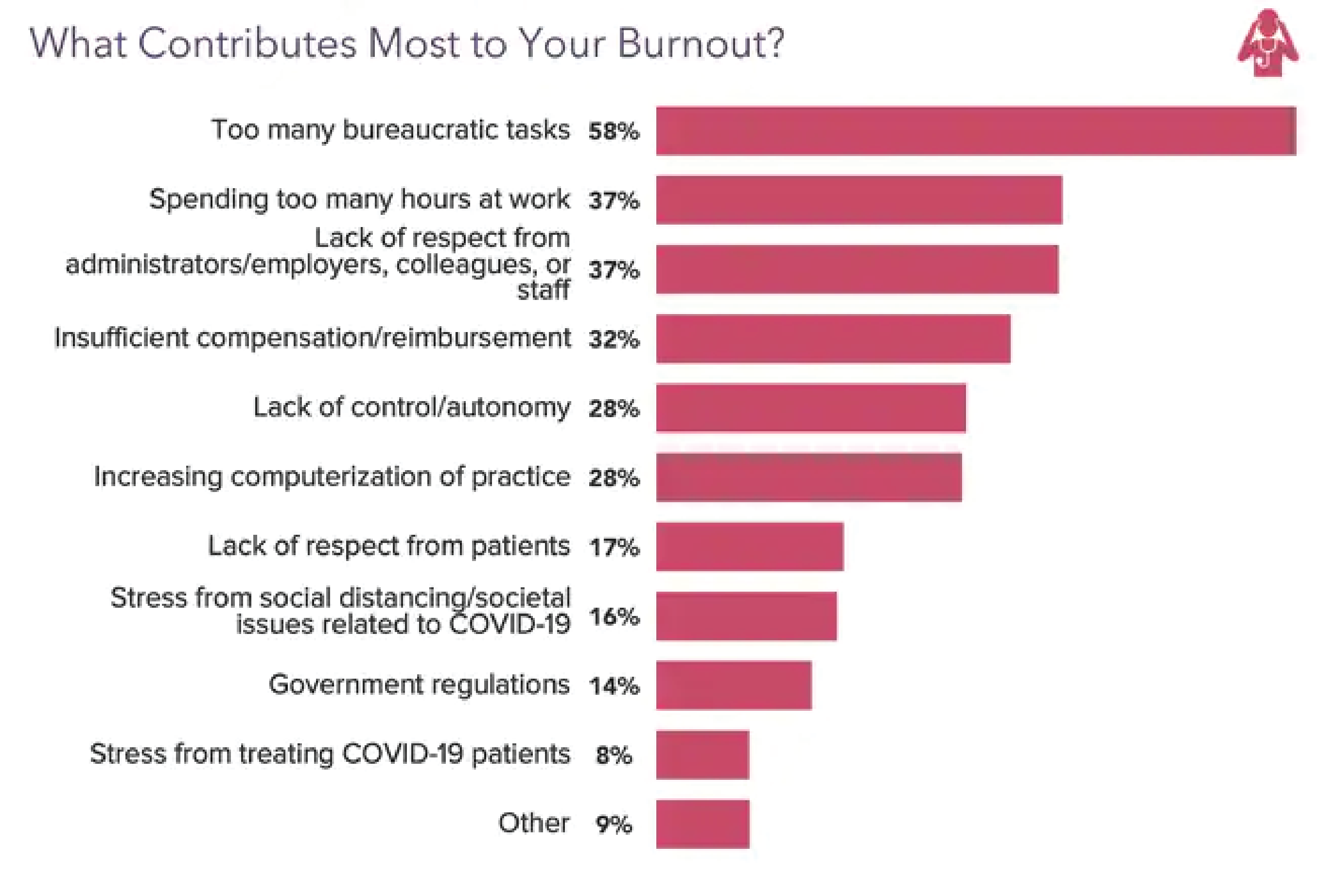
These reports, sadly, are no longer surprising. We’ve grown numb to the numbers. But, if we step away from the statistical jargon for one moment we can consider this: for every two people we know who work in a clinical setting, it’s likely that one is severely burnt out.
That is a jarring and heartbreaking reality.
Considering the primary causes of this plaguing burnout are inextricably linked to administrative tasks and a top-heavy work-life balance, it becomes obvious how ambient clinical intelligence can work to reverse burnout.
Because ambient clinical intelligence is fully autonomous, it can work 100% for the clinician without requiring any significant oversight or management. Imagine a tool that takes care of all of your note taking, all of your bureaucratic tasks, all of your documentation, reports, charts, orders, insurance claims, and more. What would that tool allow you to do? How would that tool change your life?
How Ambient Clinical Intelligence Will Transform Care
The ACI industry often talks about how much time clinicians would save if all of their EHR-related documentation and clerical tasks were automated, but in addition, we like to talk about how we can bring the joy of care back to medicine. It’s a subtle but important difference. Bringing the joy back to care starts by creating an all-encompassing ACI tool that is capable of changing the lives of healthcare providers, and thus healthcare on every level.
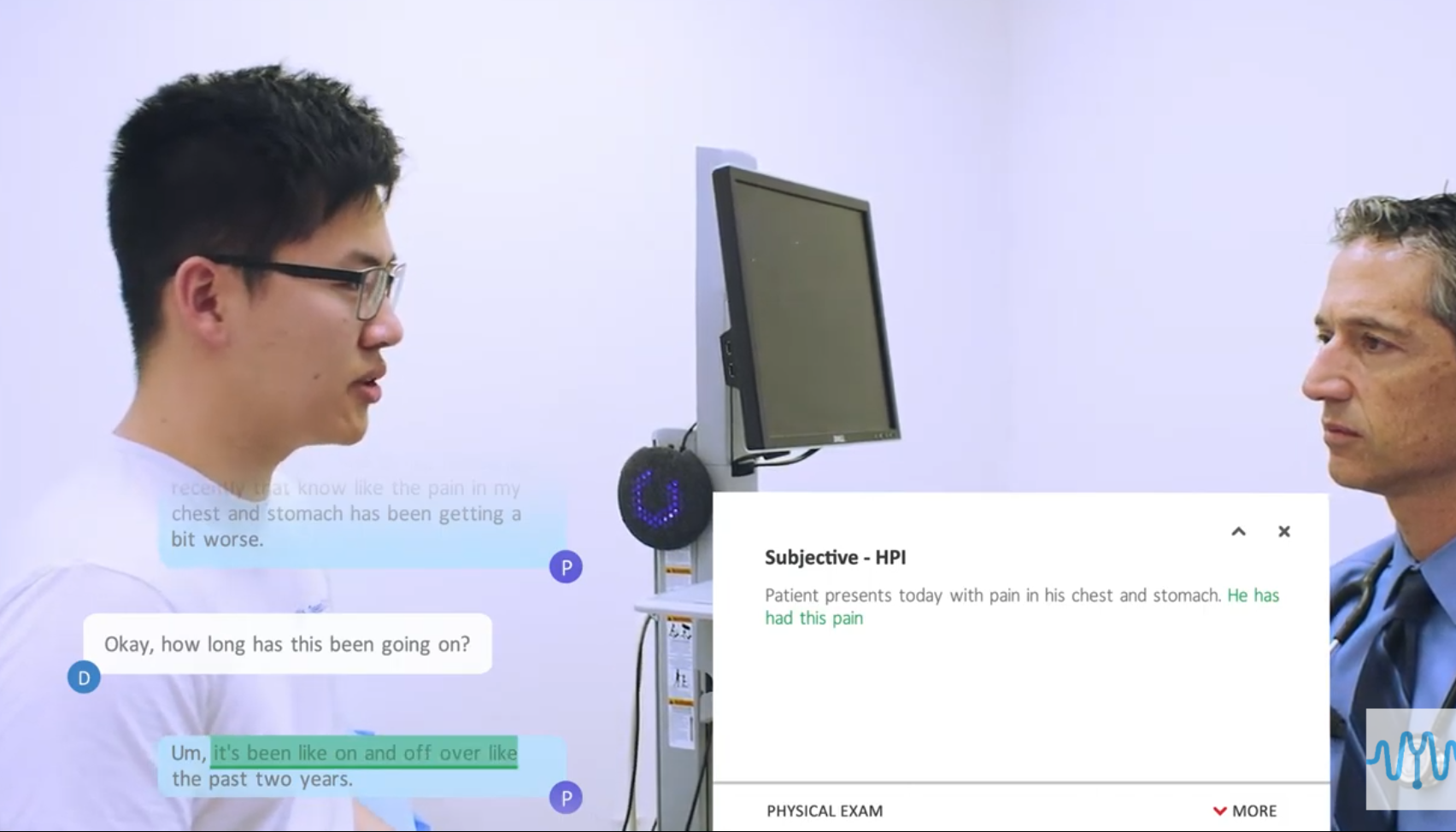
Ultimately, the opportunity for change lies in the hands of each individual, but imagine a healthcare industry where providers don’t have to spend time taking notes or staring at a computer screen during a patient visit. One where providers can finish work on time and return their life-work balance to healthy levels. The impact would be tremendous.
DeepScribe allows you to separate yourself from what burns you out and get back to your joy, so you can in turn bring joy back to the patients you so deeply care for.
text
Related Stories



Realize the full potential of Healthcare AI with DeepScribe
Explore how DeepScribe’s customizable ambient AI platform can help you save time, improve patient care, and maximize revenue.