Fixing the Access Gap in Oncology: Equity, Clinical Trials, and What AI Can't Solve Alone with Aparna Parikh, MD
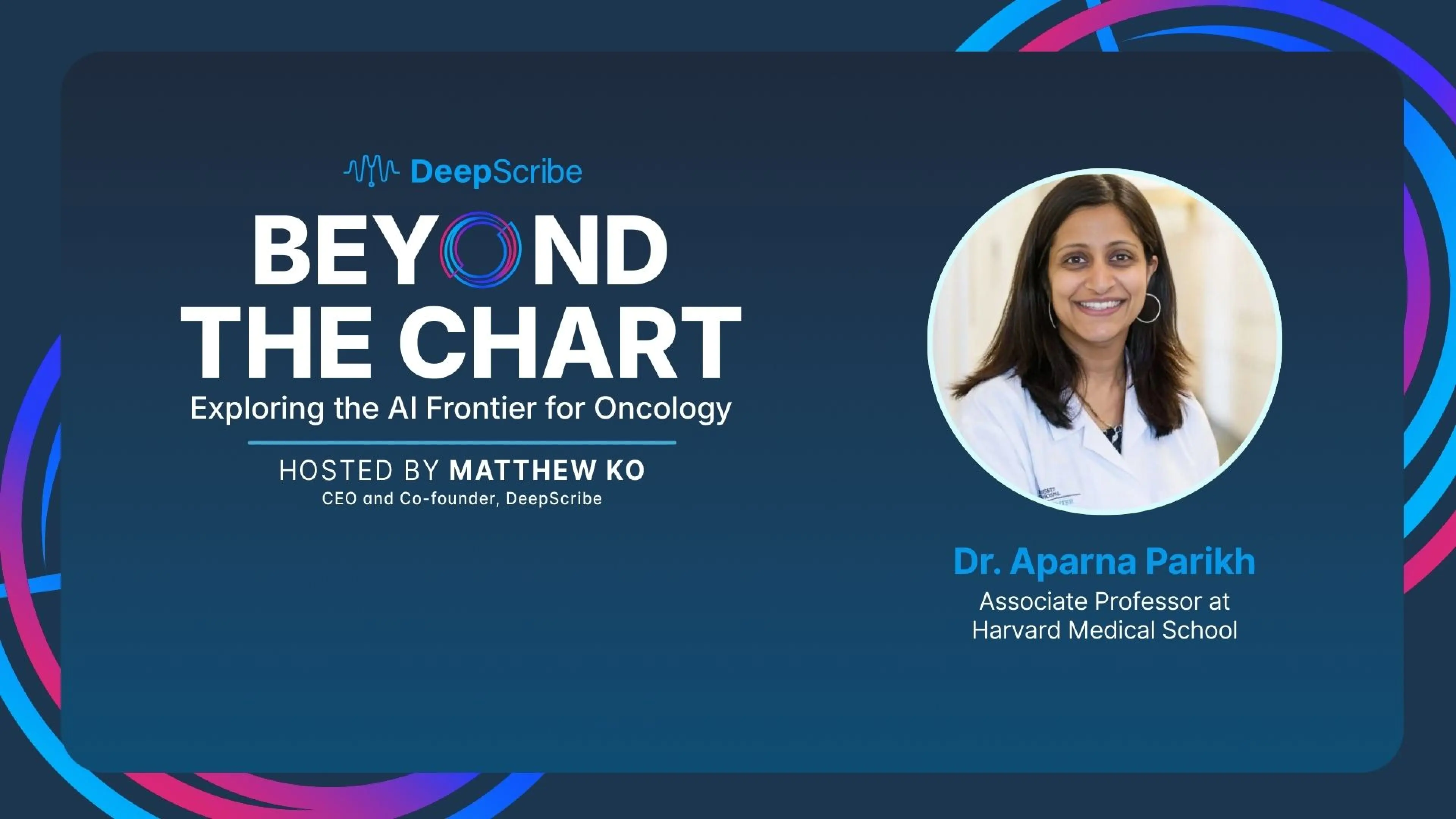
In oncology, most conversations about AI start at the point of care. But what happens when the patient doesn’t get to that point in the first place? That's the question at the center of this conversation with Dr. Aparna Parikh and DeepScribe CEO Matthew Ko.



Guest
Associate Professor of Medicine, Harvard Medical School; Medical Director, Young Adult Colorectal Cancer Program; Director, Global Cancer Care Program; Director, Colorectal Cancer Medical Oncology Research, Massachusetts General Hospital Cancer Center
Key Insights
- The access gap in oncology starts before the first appointment. Foundational barriers such as missing infrastructure, limited health literacy, and inability to navigate complex care systems prevent patients from ever reaching an oncologist. AI alone cannot fix that.
- Colorectal cancer is a quiet crisis in younger adults. It's now the leading cause of cancer mortality in adults under 50 for both men and women. However, awareness, screening rates, and follow-through on positive results remain low.
- The clinical trial system better serves well-resourced patients. Those who can travel, self-advocate, and get on multiple wait lists simultaneously have a decisive advantage.
- Even experienced oncologists can't keep track of open trials. Tracking trial availability within a single health system is already difficult; doing it on a national scale is essentially impossible without AI-assisted support.
- For better trial matching, clinicians don’t need a longer list. They need real-time slot availability and clear eligibility information, delivered in a single workflow touchpoint.
What Does the Access Gap in Oncology Actually Look Like?
Most technology that’s built for oncology assumes the patient is already in the room. Dr. Parikh looks at the situation several steps earlier.
She sees patient access as a problem of infrastructure rather than information. Patients need health systems capable of receiving them, navigators capable of moving them through the system, and enough knowledge to engage with the system in the first place.
Without all three, patients can’t benefit from even the most sophisticated AI tools.
"How can you create an equitable infrastructure that allows patients, wherever they may be, to engage in care?"
To show how these failures compound, Dr. Parikh points to colorectal cancer. It's now the leading cause of cancer mortality in all adults under 50, yet many patients still don't know their screening age, their risk factors, or what to do when a test comes back positive.
Knowledge matters but it can only go so far. If a patient lives three or four hours from the nearest endoscopy center and no one follows up on a positive result, the information is irrelevant.
The same dynamic plays out in Dr. Parikh’s global health work. In low- and middle-income countries, a cancer diagnosis may come without access to pathology or necessary therapies. She describes a program in India: People in rural farming communities are screened for oral cancer due to their tobacco habits. Community health workers are trained to identify lesions, and then use digital tools and language-concordant support to ensure patients don't fall out of the system before they get the care they need. The lesson translates directly to underserved populations in the United States.
Why Can't AI Just Solve the Patient Access Problem?
AI can personalize information delivery by adjusting reading level, translating clinical jargon, and meeting patients in context. But that’s not enough on its own.
"If patients can't afford a day off to do this, none of the tools are actually going to move the needle."
Dr. Parikh flags a risk that doesn't get raised often enough: without deliberate design, AI could actually widen disparities rather than close them. The patients most likely to benefit from digital health tools are already the most resourced. They’re educated, technologically literate, and have the connectivity to use these tools. Patients who most need support may not know how to log into a portal. (Some of Dr. Parikh’s older patients prefer a phone call.) Some can't get on a Zoom call. Notification pings don’t work for patients who don’t open them.
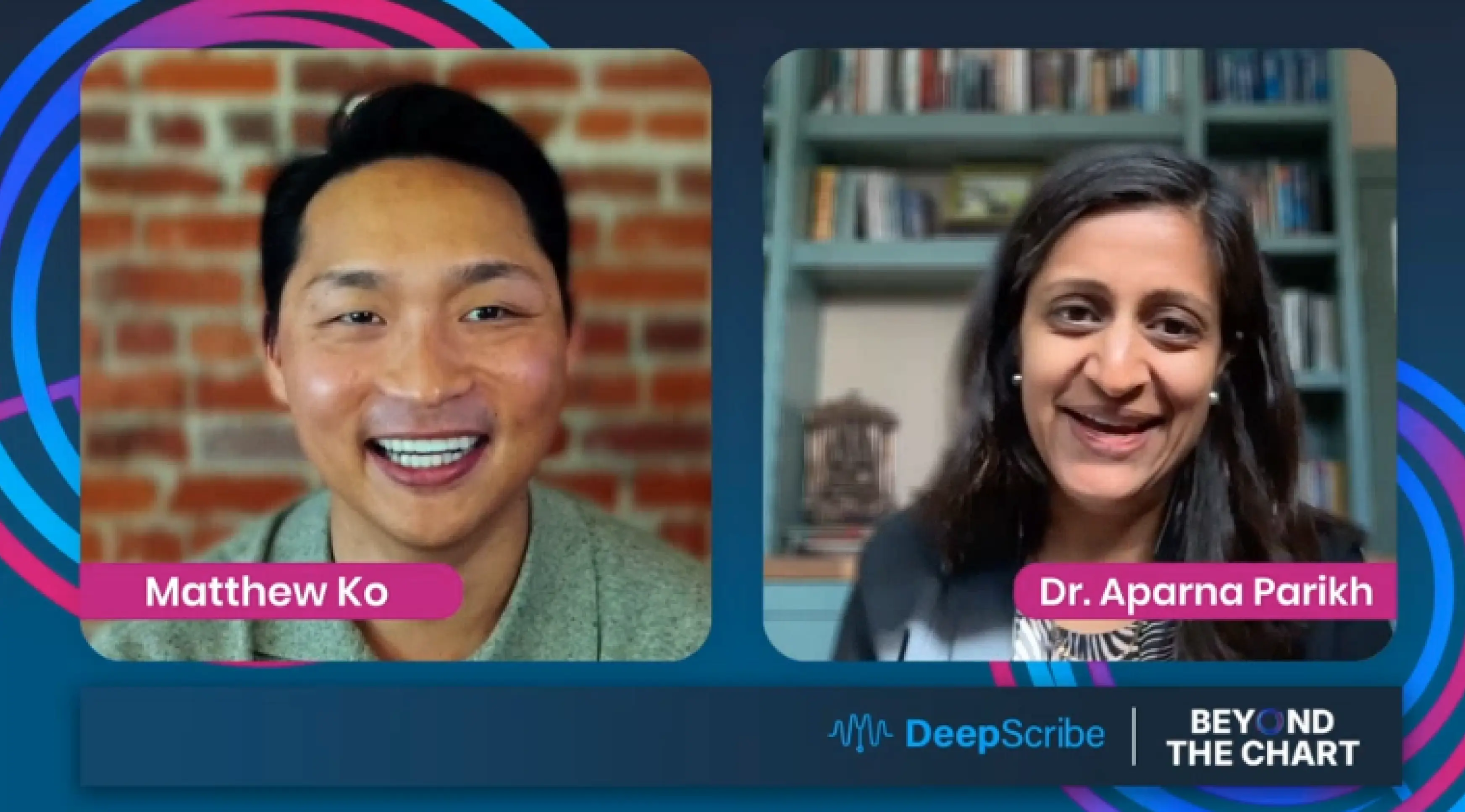
To quote Matthew Ko from the episode: “Technologists building a lot of these technologies kind of start with the assumption that the infrastructure's there and it's already perfect.”
How Does the Clinical Trial System Fail Patients?
As the conversation turns to clinical trials, Dr. Parikh discusses a specific, structural dysfunction that she’s witnessed repeatedly.
When a high-demand trial opens, well-resourced patients often place themselves on wait lists at multiple institutions simultaneously. A patient in the Northeast who should be able to access a trial near home might end up enrolling in the Midwest simply because that site had an opening first.
"Running many of these clinical trials, you end up seeing patients who are flying all over the country to get on wait lists for the same trial at seven or eight places."
The result is a system that rewards hustle and resources over clinical fit. Patients who can't navigate multiple institutions—requiring, at minimum, days off and travel— are far less likely to get what they need. As Dr. Parikh points out, data shows that Black and Hispanic patients enroll in clinical trials at far lower rates than their share of the cancer population would predict. Native populations are even more underrepresented.
Dr. Parikh also surfaces a problem that sits entirely within health systems: eligible patients get missed. Even at a major academic medical center, a clinician may not (or simply cannot) know every trial currently open within their own network. For a community oncologist seeing breast, prostate, colon, and every other cancer, keeping track of national trial availability is essentially impossible. Alterations that should trigger a trial conversation go unrecognized because no one flagged them.
"I can't even keep track of every trial that is open within Mass General Brigham. We have hundreds of clinical trials open, let alone navigating nationally."
How Can AI Help Improve Clinical Trial Matching?
With this one question, Matt shifts the conversation from diagnosis to design. And Dr. Parikh’s response may not be what most technologists would build first.
Dr. Parikh wants a single touchpoint: enter a patient's basic profile, get an immediate read on eligibility red flags, and then know whether a slot is actually available at a site the patient can reach.
Not a link to ClinicalTrials.gov or list of 20 locations. The value is in real-time slot availability, updated continuously, with a queue system that places a patient next in line when a slot opens near their home.
"I want to know if that patient were to make a visit at any of those places next week—or the closest place they can make a visit—that they're actually going to get a slot. In real time."
Matt points out that this is an interoperability problem as much as a technology problem. Getting real-time slot data from dozens of independent institutional systems requires data pipelines that no single company can build alone. It likely requires the kind of public-private partnership Dr. Parikh describes, in which biopharma, academic medical centers, and the public sector all agree on a shared infrastructure.
Where Can AI Have the Greatest Impact?
Dr. Parikh is specific about where AI can actually help.
- Automating baseline eligibility screenings, which currently fall to already-overloaded research staff
- Flagging alterations that can trigger a trial conversation.
- Reducing the administrative overhead that makes clinicians reluctant to put patients on trials even when they're eligible.
Just like documentation, the foundational starting point for ambient AI, these tasks are what AI does well and what people find most draining.
When the documentation, screening work, and trial-tracking overhead are handled, clinicians have the cognitive space to take on the complex reasoning that remains uniquely theirs.
What AI won't do—clearly conveyed in this episode—is make up for structural shortcomings that open the door for patients to access care in the first place. Creating and collaborating on interoperable systems are distinctly human decisions.
You may also like:
Paving the Road to Nirvana in Oncology: A Conversation with Dr. Debra Patt
Subscribe to Beyond the Chart to be notified of future episodes.
Learn more about DeepScribe's industry-leading ambient AI for oncology.
text
Related Stories
Realize the full potential of Healthcare AI with DeepScribe
Explore how DeepScribe’s customizable ambient AI platform can help you save time, improve patient care, and maximize revenue.