Using DeepScribe at Texas Oncology - Austin
Ruby Gomez, FNP-BC, and Dr. Amar Shah from Texas Oncology share how DeepScribe elevates patient care and transforms clinical documentation workflows.



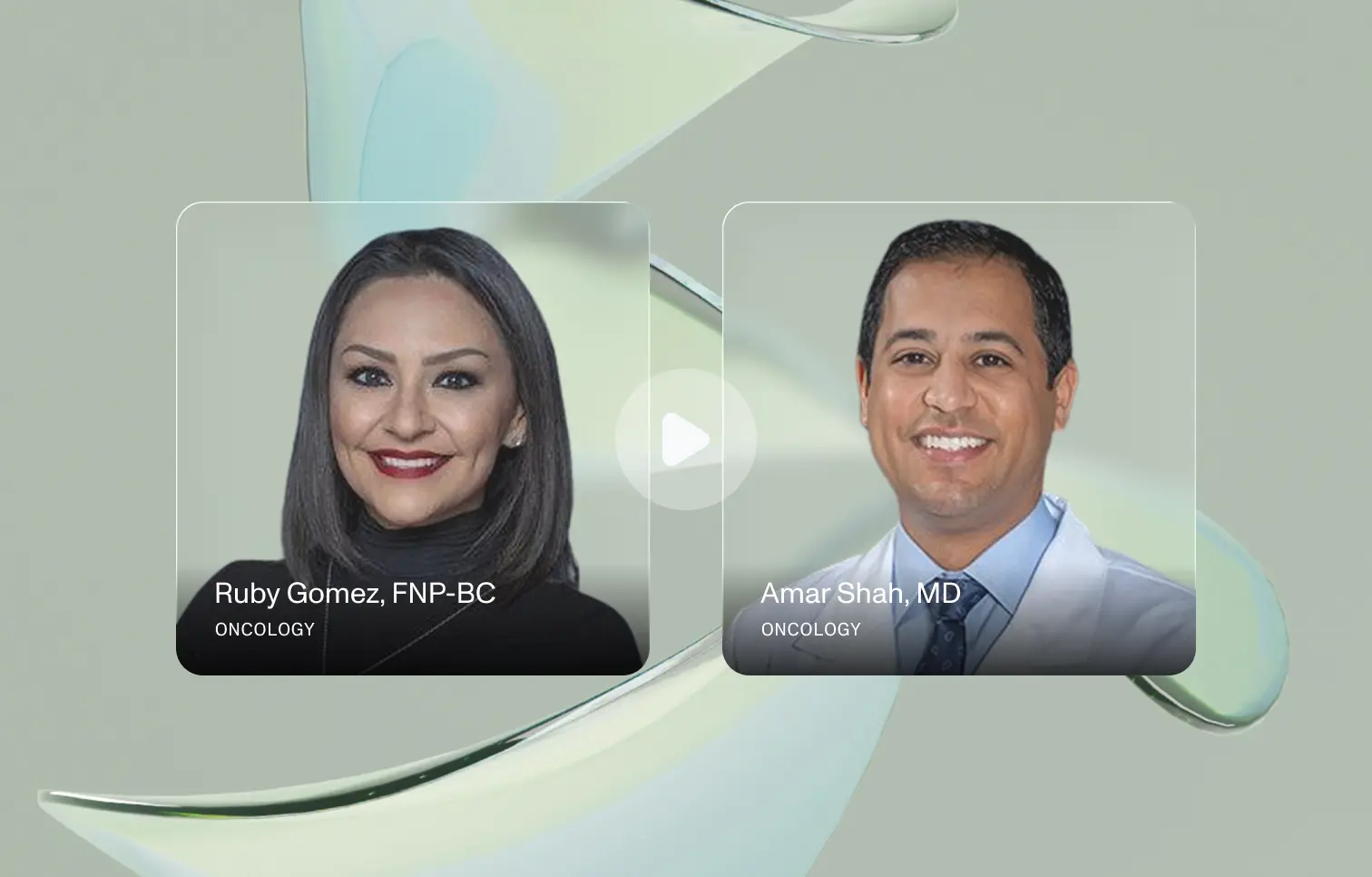
For oncology patients facing life-changing diagnoses, every moment with their healthcare provider matters deeply. At Texas Oncology – Austin, Ruby Gomez, FNP-BC, and Dr. Amar Shah understand that genuine connection during these critical conversations can make all the difference in a patient's journey.
The technology disappears in their practice. Suddenly, Dr. Shah isn't typing frantically, he's fully present, able to hold a hand or maintain eye contact during difficult conversations about treatment.
What makes DeepScribe particularly valuable in oncology is its ability to adapt to individual provider preferences while still capturing the detailed clinical information crucial for complex cancer care. For Gomez, the system's precision in documenting ICD-10 codes and clinical details allows her to focus on educating patients about their condition instead of worrying about documenting it correctly. The result is a transformed practice where technology enhances the human connection at the heart of healing, rather than competing with it.
Transcript:
Ruby, A. Gomez, FNP-BC: I have become dependent on DeepScribe. I will be honest. I absolutely love it. It gets more succinct, accurate, and captures areas that I missed.
Amar S. Shah, MD, MBA, Colorectal Surgeon: As a colon and rectal surgeon, it is not easy for a patient to come in to see me. DeepScribe, what it allows for is direct eye contact. I can hold their hand if they're emotional about what we're talking about. And I've had patients, their feedback, say that the way that you interacted with me that really made that visit and built their confidence in their care.
Gomez: With DeepScribe, we're able to take that extra time because I'm not, you know, looking down, writing notes, or typing as they speak. That trust, that bond is created, and I've heard that from several patients.
Shah: I use it for every encounter, whether it's a follow-up, a new patient, and the entire variety of the different types of pathology that I see in my office. I've learned how to customize and personalize it because medicine is personalized, and we don't want a same cookie cutter note. Documentation for a colorectal surgeon varies differently for an oncologist versus a urologist. And so by allowing the DeepScribe features for customization, it allows to focus on what's important for that particular provider.
Gomez: As I'm teaching the patient, this is where your kidney function is at, and this is considered his CKD 3A, 3B. I come over here and I already have my ICD-10’s captured by DeepScribe. So that is extremely helpful, and we are able to capture more of those hierarchical, ICD-10’s. The patients are saying so much in that visit that it's just difficult for us to capture everything. When it just captures from beginning to end and creates a small interval history, I'm like, thank god for DeepScribe.
text
Related Stories
Realize the full potential of Healthcare AI with DeepScribe
Explore how DeepScribe’s customizable ambient AI platform can help you save time, improve patient care, and maximize revenue.